
Foraging Chicken of the Woods MUSHROOM + 'CHICKEN' GOUJON RECIPE!

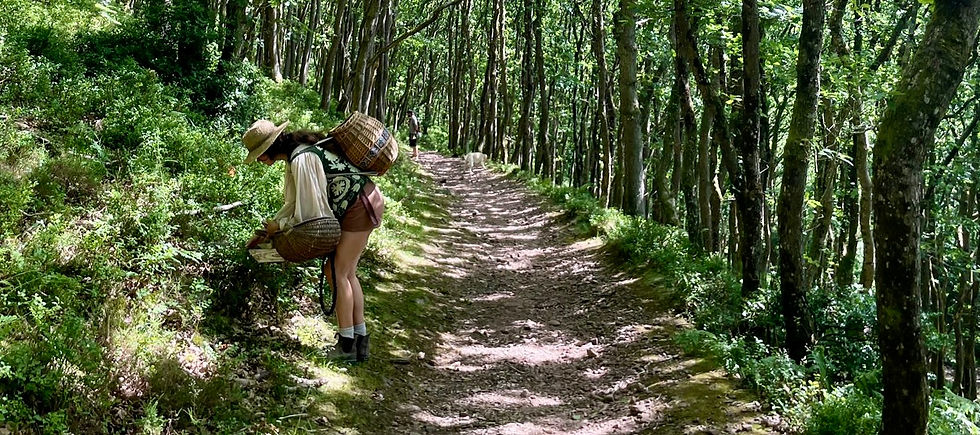
The first time I ever found a chicken of the woods mushrooms was a momentous occassion for me . I had been searching for YEARS, even walking into the forest barefoot ask the the woodland spirits to show me the way to the chicken of the woods mushrooms. Eventually, I found it growing on a tree right outside my house. When the time comes, the chicken of the woods will find you! I now spot it regularly in woodlands or growing from trees on roadsides. The bright orange colour is a really useful flag for the wondering forager.
Chicken of the woods is a beginner friendly mushroom to learn how to identify as it has no toxic lookalikes - as long as you make sure you follow the foraging guide below, you should be nice and safe. It is amazing in the kitchen and can go into pies, curries and stews, or made into burgers, tacos or goujons. The texture has that tender and juicy 'stringiness' of chicken, and when picked young, is wonderfully flavourful and meaty.
That said, it still needs care. Correct identification, sensible harvesting, and thorough cooking. You might have heard that not everyone gets on with chicken of the woods as a food, and I have met just one or two people in my time who have said this mushroom has made them feel a bit ill. So when you first try it, make sure you just have a little at first. I have found then when it's boiled for around 20 minutes before cooking, even people who this mushroom doesn't usually agree with, don't experience any sickness, so please don't skip that step.
This guide covers where to find it, how to recognise it, what to avoid, and how to turn a clean young bracket into golden, crunchy goujons.

What IS chicken of the woodS?
Chicken of the woods is the common name for Laetiporus sulphureus, a bracket fungus that grows on wood rather than from soil. It often appears in brackets, forming overlapping shelves from the trunk or stump of a tree.
Fresh young growth is usually:
Bright yellow underneath
Orange to peach on top
Soft and slightly springy
Fan-shaped or shelf-like
Smooth underneath, with tiny pores rather than gills
The underside is an important detail. Chicken of the woods does not have gills. It has a pore surface, ranging from bright yellow to a soft yellowish cream colour.
As it ages, the colour fades, the edges dry out, and the flesh becomes chalky, woody, or crumbly. Older pieces are not worth taking for food. They can be tough, bitter, and harder to digest.
Foraging Chicken of the woods is often beginner-friendly compared with many wild mushrooms, but “distinctive” does not mean “risk-free”. Use several identification features together, not one.
Where and when to find it in the UK
Chicken of the woods grows across much of the UK, usually from late spring through autumn. The main season often runs from May to October, though weather matters more than the calendar. Warm, damp spells can bring it on quickly.
It grows on living or dead wood, especially hardwoods. Common host trees include:
Host tree | Notes for foragers |
Oak | A classic host and one of the most common places to find it |
Cherry | Often produces tender, richly coloured brackets |
Willow | Can produce large growths, often near water |
Sweet chestnut | Another good hardwood host |
Beech | Possible, though less often mentioned than oak |
Look around old trees, damaged trunks, fallen logs, and stumps. Parks, ancient woodland edges, old orchards, canal paths, and hedgerows can all be productive.
Do not harvest from polluted places. Avoid mushrooms growing:
Beside busy roads
On treated timber
Near industrial sites
In areas sprayed with chemicals
From yew trees.(there is debate about whether this is okay or not, best just not to risk it in my opinion)
How to identify chicken of the woods safely
Start with the whole picture. A good edible specimen will normally look like a series of soft, fleshy shelves growing directly from wood.
Key identification points:
Growth habit
It forms brackets on trees, logs, or stumps. It does not grow as a normal cap-and-stem mushroom from grass.
Colour
Young growth is vivid yellow and orange. The underside is often bright yellow.
Underside
It has tiny pores, not gills, teeth, or a smooth stemmed cap.
Texture
Young edges are tender and slightly flexible. The centre can be firmer.
Smell
It should smell mild and mushroomy, sometimes a little lemony or fungal. Avoid anything sour, rotten, or unpleasant.
If the fungus is pale, brittle, dry, badly insect-damaged, or crumbling, leave it, it's probably too old to be enjoyable. If you are not fully sure of the identification, do not eat it.
Never rely on an app alone for mushroom identification. Use a good field guide, cross-check multiple features, and ask an experienced local forager or mycological group when in doubt.

Avoid eating a large portion the first time
Some people react badly to chicken of the woods, even when it is correctly identified and cooked. Reactions can include stomach upset. The sensible approach is:
Cook it thoroughly (boil for 20 minutes before using it in a recipe)
Eat a small amount the first time.
Wait and see how you feel.
How to harvest it well
Take a small knife and a basket. Do not use a plastic carrier bag if you can avoid it, as mushrooms sweat and deteriorate quickly (it also doesn't allow you to help them spread their spores through the woods!)
Cut only the tender parts. You rarely need the whole bracket, just take a small amount and leave the rest for other foragers, or just to grow and spread spores. If the mushroom is young, take a few brackets, if it's older and tougher, take the young outer edges and leave the tough base attached to the tree.
Good harvesting habits:
Take only what you will use within a day or two
Leave plenty behind for wildlife and other foragers
Avoid damaging the tree
Clean off insects and debris in the field where possible

Cleaning and preparing it at home
Deal with chicken of the woods soon after picking. It is best fresh. If you leave it too long, it can dry out or become sour.
Start by checking each piece. Remove:
Bark
Moss
Soil
Insect-damaged sections
Tough woody base
Any dry or chalky parts
Use a soft brush or damp cloth for light cleaning. If it is very dirty, a quick rinse is fine, but do not soak it. Pat it dry afterwards.
Slice across the grain into strips, chunks, or goujon-sized pieces. For goujons, aim for pieces about the size of a thick finger. They should be even enough to cook at the same speed.
Chicken of the woods goujons recipe
These goujons are crisp outside and tender inside, with a savoury coating that suits the mushroom without hiding it. They are good with chips, salad, slaw, or stuffed into a wrap with lettuce and pickles!
Ingredients
Serves 2 as a main, or 4 as a snack.
roughly 300 g young chicken of the woods, cleaned and cut into strips
1 litre water, for simmering
1 tsp salt, for the simmering water
75 g plain flour
1 tsp cajun seasoning
1 tsp smoked paprika
1 tsp garlic granules
½ tsp ground black pepper
½ tsp fine salt
2 eggs, beaten
120 g panko breadcrumbs, or fresh breadcrumbs
Neutral oil, for shallow frying
Lemon wedges, to serve
For a quick dip:
4 tbsp mayonnaise
1 tsp Dijon mustard
1 tsp lemon juice
1 small gherkin, finely chopped
A pinch of black pepper
Method
Simmer the mushroom
Bring the water to a gentle boil and add 1 tsp salt. Add the chicken of the woods strips and simmer for 15 minutes. Drain well, then pat dry with kitchen paper or a clean tea towel.
Set up the coating bowls
Put the flour in one bowl with the smoked paprika, garlic granules, black pepper, and fine salt. Put the beaten eggs in a second bowl. Put the breadcrumbs in a third bowl with the Parmesan, if using.
Coat the strips
Dip each strip into the seasoned flour, then the egg, then the breadcrumbs. Press the crumbs on lightly so they stick. Place the coated pieces on a plate while you finish the batch.
Fry until crisp
Pour oil into a frying pan to a depth of about 1 cm. Warm it over a medium heat. Fry the goujons in batches for 2 to 3 minutes on each side, until golden and crisp. Do not crowd the pan.
Drain and season
Lift the goujons onto kitchen paper. Sprinkle with a little extra salt while hot.
Make the dip
Stir together the mayonnaise, mustard, lemon juice, chopped gherkin, and pepper.
Serve straight away
Serve with lemon wedges and the dip. The coating is best while hot and crisp.

Storage and cooking tips
Fresh chicken of the woods keeps best in the fridge in a paper bag or loosely covered container. Use it within a couple of days if possible. Do not seal it in plastic for long periods, as trapped moisture can make it spoil faster.
You can freeze it after cooking. For goujons, freeze them after breading or after frying, but the texture is best fresh. If reheating cooked goujons, use an oven or air fryer rather than a microwave, which softens the crumb.
A few extra tips help avoid disappointment:
Cut away any dense, woody base before cooking
Pre-cook thicker pieces before frying or roasting
Pair it with bold flavours such as garlic, lemon, paprika, thyme, mustard, or chilli
Keep the first tasting portion small
Cook it all the way through, every time
Chicken of the woods is not a mushroom to undercook. When properly prepared, the texture should be firm and juicy, not raw or spongy.
The simple rule that keeps this mushroom enjoyable
Chicken of the woods is at its best when you are choosy. Choose a young bracket, on a known safe host, from a clean place, and take only the tender amount you need. Leave old, dry, doubtful, or awkward finds behind.
That restraint pays off in the kitchen. A small basket of prime young chicken of the woods is far better than a huge haul of tough brackets. Turn it into goujons while it is fresh, serve it hot with lemon and dip, and you get one of the real pleasures of UK foraging!


Comments